
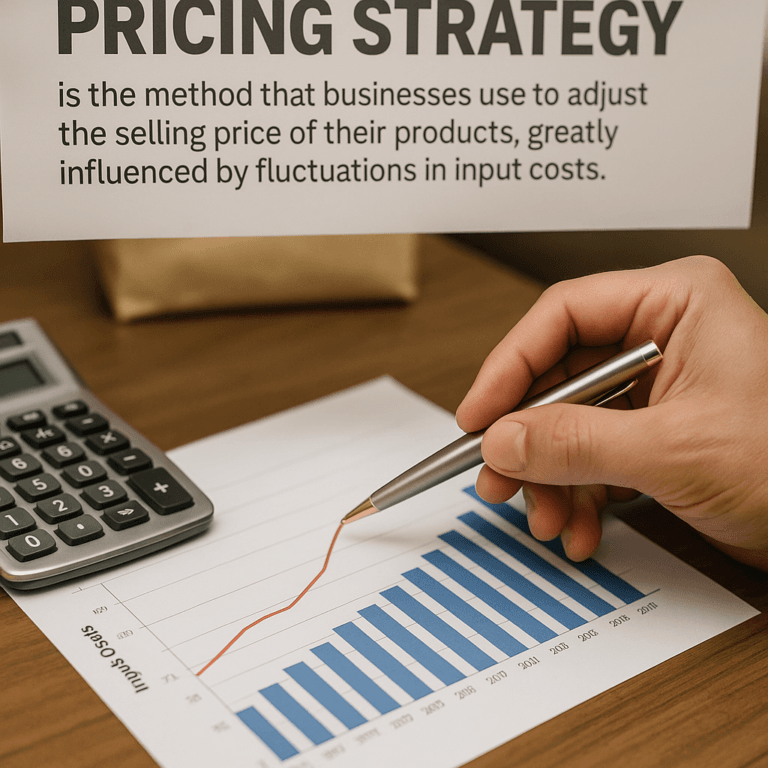
Reading Competitors’ Pricing Strategy When Input Costs Fluctuate
1. Pricing Strategy in Business
Pricing strategy is the method that businesses use to set the prices for their products or services. An effective pricing strategy not only helps businesses optimize profits but also attracts and retains customers. There are various types of pricing strategies, such as:
- Cost-based pricing: Setting prices based on total production costs and additional expenses.
- Psychological pricing: Pricing in a way that creates a favorable impression on customers, e.g., 99,000 VND instead of 100,000 VND.
- Competitive pricing: Pricing primarily based on market prices and competitors’ prices.
2. The Impact of Input Cost Fluctuations on Pricing Strategy
Input cost fluctuations often occur due to various reasons, including changes in raw material prices, market conditions, or government regulations. When input costs rise, businesses will need to adjust their pricing strategies to maintain profit margins. This can lead to:
- Price increase: Businesses may need to raise prices to compensate for higher raw material costs.
- Reduced profit margins: If prices are not increased, profits may decline if input costs rise.
- Product innovation: Some businesses may choose to improve or change their products to reduce costs.
3. Reading Competitors’ Pricing Strategies Amid Input Cost Fluctuations
To read competitors’ pricing strategies, businesses should pay attention to signs that indicate competitors are changing their selling prices. Some important signs include:
- Changes in the frequency of discounts.
- New pricing policies or lack of promotions.
- Changes in advertising and marketing communications.
Analytical tools and methods such as market research, customer surveys, and competitor strategy analysis can assist businesses in identifying their competitors’ pricing strategies.
4. Competitive Analysis Through Pricing Strategy When Costs Fluctuate
In a competitive context, analyzing competitors’ pricing strategies is essential. Businesses can perform:
- Comparative analysis of competitors’ pricing strategies across different types of input costs.
- Case studies from similar companies to learn how they respond to cost fluctuations.
Additionally, analysis tables, cost graphs, and sales prices over time can help businesses easily track fluctuations in their competitors’ pricing strategies.
5. Applying Insights from Competitors’ Pricing Strategies to Adjust the Business
After grasping information about competitors’ pricing strategies, businesses should lead their teams to adjust their pricing strategies accordingly. Some flexible pricing strategies that can be applied include:
- Reactive pricing: Increase or decrease prices depending on fluctuations in input costs.
- Diverse pricing proposals: Offering multiple price levels to cater to different customer groups.
Businesses should also regularly monitor changes in costs and selling prices to make timely adjustments.
6. Conclusion: The Importance of Monitoring Competitive Pricing Strategies When Input Costs Change
Monitoring competitors’ pricing strategies is an essential part of business management, especially when input costs fluctuate. Only by understanding clearly can businesses make reasonable pricing decisions, contributing to success and sustainable development in the market. Contact us today for tailored consultation!
Intage Vietnam: Your trusted partner for comprehensive and effective market research solutions.
📞 (+8428) 3820 5558
🌐 https://intage.com.vn/
🏢 1st floor, Citilight Tower, 45 Vo Thi Sau St., Tan Dinh Ward, HCMC