

Research insights
Children’s Health Care Products: How Parents Choose and How to Research Them

On this page
Children’s health care products include nutrition, hygiene, skincare, oral care and home health items made for babies and children. In this category the user is the child but the buyer is the parent or carer, and the decision is driven by safety, trust and advice from others. Before launching or repositioning a product, brands need research that shows how parents choose, whom they trust and what makes them switch.
What does the children’s health care product category include?
- Nutrition: formula, fortified foods and drinks, and supplements for children.
- Hygiene and skincare: baby wash, lotions, sunscreen, nappy care and products for sensitive skin.
- Oral care: toothpaste and toothbrushes designed for children.
- Home health items: thermometers, nasal aspirators and similar devices.
Many of these products are subject to strict rules on composition, labelling and advertising, especially for young children. This article covers consumer research, not medical or nutrition advice; claims and product decisions should be checked with qualified experts and regulators.
How do parents choose children’s health care products?
Parents usually describe a similar set of priorities, though their weight differs between families and should be measured:
- Safety: clear ingredients, suitability for the child’s age and recognised quality marks.
- Trusted advice: recommendations from doctors, pharmacists, family and other parents.
- Gentleness: interest in mild formulas and fewer additives.
- Authenticity: concern about counterfeit products, which affects where they buy.
- Convenience: formats that fit busy family routines and that children accept.
Decisions are often shared. One parent may research, another may buy, and grandparents may influence or pay. Research needs to identify each role.
What should you measure?
| Question | What to measure | Method |
|---|---|---|
| Who decides and who buys? | Roles of parents, grandparents and carers | In-depth interviews, survey |
| What drives choice? | Importance of safety, advice, price, brand, ingredients | U&A survey |
| Whom do parents trust? | Information sources and their influence | Survey, online discussion boards |
| Where do they buy? | Channel use: mother and baby stores, pharmacies, supermarkets, online | Survey, shopper panel |
| Does the product work for the child? | Acceptance, ease of use, parent satisfaction | Home use test |
| Do they stay loyal? | Repeat purchase and brand switching | Shopper panel |
How can you research parents in Vietnam?
- Start with qualitative research. In-home visits and in-depth interviews with parents show real routines, fears and the sources they rely on.
- Use a representative sample. Parents differ by child age, city and income. Sampling should reflect the parents you want to reach, with quotas by child age.
- Test concepts and packs. Measure understanding of claims, trust and purchase intent before launch, and check that labels are clear.
- Run a home use test. A HUT shows whether the child accepts the product and whether it fits family routines.
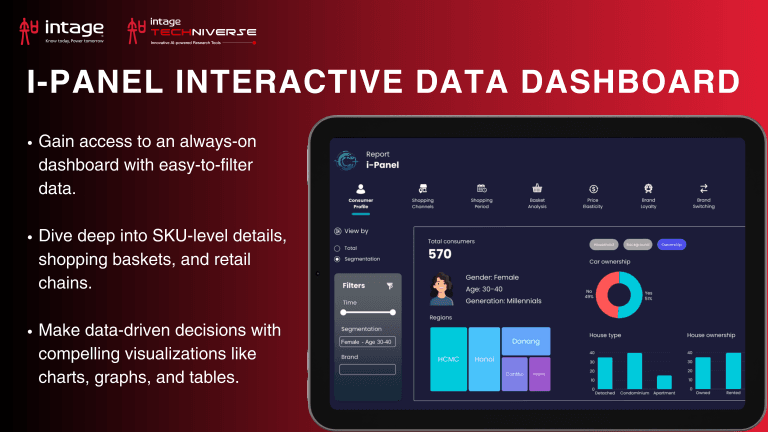
- Follow purchase behaviour. Shopper panel data such as i-Panel shows channel shifts, repeat purchase and switching between brands.
What research mistakes should you avoid?
- Interviewing only one parent. Missing the other decision makers gives an incomplete picture.
- Asking leading safety questions. Every parent says safety matters. Ask parents to trade off attributes or rank them to see what really drives choice.
- Testing unapproved claims. Stimulus should use claims that can legally be made, or results will not be usable.
- Overlooking ethics. Research involving children needs parental consent and child-appropriate methods.
How do you act on the findings?
Use the research to decide which age group and need to target, which proof of safety and quality to show, which advisers to inform, and which channels to prioritise. Then track repeat purchase and switching to see whether trust is being built over time.
FAQ
Who should you interview for children’s products?
Parents and carers who decide and buy, with quotas by child age. Children can take part in product tests with parental consent and suitable methods.
How do you measure trust in a children’s brand?
Ask about perceived safety, quality and recommendation, and check behaviour through repeat purchase and switching.
Can a brand make health claims for children’s products?
Claims for children’s products are tightly regulated. Brands should get regulatory advice before using any claim in packaging, advertising or research.
Understand parents’ decisions
INTAGE Vietnam is a market research company in Vietnam and part of the INTAGE Group, Japan. We help mother and baby brands with qualitative research, U&A surveys, product tests and shopper panel data. See our market research services or contact us to plan a study.
Related reading
Latest posts
- Market Research: Building a Market Research Report for Investment Funds
 Survey Sample Size: How Many Respondents Are Enough?
 Survey Data Collection Methods in Vietnam: How to Choose
- Technology Adoption in Enterprises: How to Research Employee Behavior
 How to Write a Market Research Brief for an Accurate Quote

