
Research insights
Men’s Health Care Products: How to Research Male Consumers

On this page
Men’s health care products are personal care, skincare, nutrition and wellness products developed or positioned for men. Interest in this segment is growing, but men often shop differently from women: they prefer simple routines, research privately and may feel hesitant to ask for advice. For brands, consumer research is the way to understand who buys, why, where and what stops others from buying before investing in a men’s range.
What counts as men’s health care products?
The segment is broad and usually includes:
- Personal care and grooming: face wash, shaving products, deodorant, hair care.
- Skincare: moisturisers, sunscreen and products for oily or acne-prone skin.
- Nutrition and fitness products: protein products, sports drinks and vitamins.
- Wellness products and services: sleep, stress and fitness-related offers.
Products with health claims are regulated, and this article does not give health advice. It focuses on how to understand men as shoppers and users.
What trends are brands watching?
Brands in this space commonly point to a few shifts: more men treating grooming and skincare as part of a daily routine, interest in prevention and fitness rather than only treating problems, a preference for simple multi-purpose products, and growing use of online channels for private, convenient purchase. These are directions to test, not facts to assume. Their strength differs by age, city and income, and research should measure them for your target group.
What should you research about male consumers?
| Question | What to measure | Method |
|---|---|---|
| Who uses which products? | Penetration and usage frequency by age, city, income | U&A survey, shopper panel |
| What motivates use? | Motives such as confidence, appearance, energy, fitness | In-depth interviews, survey |
| What stops non-users? | Barriers: embarrassment, lack of knowledge, price, habit | Qualitative research, survey |
| Where and how do they buy? | Channels, who buys for them, information sources | Survey, shopper panel |
| Does the product fit? | Product performance, routine fit, packaging appeal | Concept test, CLT or HUT |
How can you research men’s health care in Vietnam?
- Use private, comfortable formats. Some men find it hard to talk about personal care in a group. In-depth interviews often work better than focus groups for sensitive topics.
- Include the people who buy for them. Partners, mothers or other family members may buy personal care for men. Include them in the sample when relevant.
- Choose the right collection method. Online surveys suit private questions and urban, digital users; face-to-face methods reach other groups. See survey data collection methods in Vietnam.
- Test the product in real routines. A home use test shows whether men keep using a product when it is part of daily life, not just on first try.
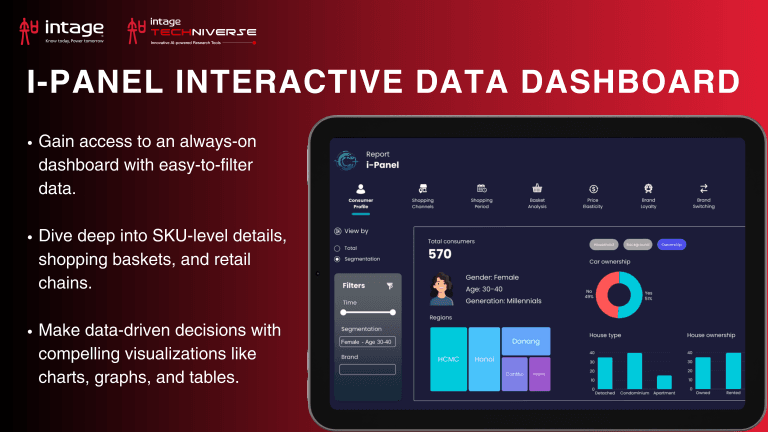
- Track actual purchase. Shopper panel data such as i-Panel shows which shoppers buy, in which channels, and whether buyers repeat.
What mistakes do brands make?
- Copying women’s products with new packaging. Men may want different textures, scents, steps and messages; test before assuming.
- Treating men as one group. Needs differ widely between students, office workers and older men.
- Relying on stated interest. Interest expressed in surveys can exceed actual use. Confirm with trial and repeat purchase data.
- Making unsupported claims. Health-related claims need evidence and regulatory review before they are used in communication or research stimuli.
How do you act on the findings?
Choose the segment and need state with the clearest gap, design a product and routine that fit how those men actually live, and write communication that addresses the main barrier found in research. Launch where the target group already shops, then track trial and repeat to refine the range.
FAQ
How do you survey men about personal care?
Use private formats such as online surveys or one-to-one interviews, ask about actual products used, and avoid wording that implies judgement.
Who buys men’s health care products?
Men themselves and often family members. Research should measure both the user and the buyer.
What is the best way to test a new men’s product?
A home use test shows how the product fits a real routine; combine it with a concept test for positioning and price.
Understand your male consumers
INTAGE Vietnam is a market research company in Vietnam and part of the INTAGE Group, Japan. We run qualitative studies, U&A surveys, product tests and shopper panel analysis for personal care and wellness brands. See our market research services or contact us to plan a study.
Related reading

Latest posts
- Effective M&A (Mergers & Acquisitions) Opportunity Research
- Market Research: Building a Market Research Report for Investment Funds
 Survey Sample Size: How Many Respondents Are Enough?
 Survey Data Collection Methods in Vietnam: How to Choose
- Technology Adoption in Enterprises: How to Research Employee Behavior

