

Research insights
Men’s Beauty Products: How to Research Male Grooming Consumers

On this page
Men’s beauty and grooming products cover skincare, hair and beard care, fragrance, body care and light makeup designed for or used by men. Interest in this category has grown as grooming is increasingly seen as part of confidence and a professional appearance, but many men still prefer simple routines and can feel unsure about what to buy. Brands entering the category need research that shows which needs, routines and barriers actually drive purchase among their target men.
What counts as a men’s beauty product?
The category runs from basic personal care to more specialised products: facial cleansers, moisturisers and sunscreen; oil-control and acne care; hair styling and beard care; fragrance and body care; and, for a smaller group, light makeup such as BB cream or concealer. Some men use products made for men, others use unisex products or products bought by a partner or family member, so a study should not define the market only by “men’s” labels.
Why is men’s grooming changing?
Several factors are often cited: social media and creators who talk openly about skincare, the link between appearance and confidence at work, and wider choice of products in stores and online. How strong each factor is differs by age, city and income group, and should be measured in the target market rather than taken from trend reports.
How do men shop for grooming products?
- Simple routines: many men prefer few steps and multi-purpose products.
- Research before buying: online reviews, videos and recommendations from friends help reduce uncertainty.
- Convenience: e-commerce lets men compare and buy without asking in-store staff.
- Loyalty after a good result: once a product works, men may repurchase it without much comparison.
What barriers stop men from buying?
Common barriers include feeling uncomfortable buying beauty products in store, not knowing which product suits their skin or hair, doubts about whether results are worth the effort, and packaging or messaging that feels aimed at women. Each barrier suggests a different response, from education to pack design to channel choice, which is why identifying the main one for your target group matters.
What should brands measure?
| Business question | What to measure | Method |
|---|---|---|
| Who uses what, and how often? | Category usage, routine steps, products used | Usage and attitude (U&A) survey |
| Which groups differ? | Needs and attitudes by age, city, lifestyle | Segmentation |
| Why do men hesitate? | Barriers, language they use, triggers to try | In-depth interviews, online discussion boards |
| Will the product and pack work? | Appeal, clarity, product experience after use | Concept test, packaging test, home use test |
| What do they actually buy? | Purchase frequency, brands, channels | Shopper panel data |
How do you research men’s beauty products in Vietnam?
- Use one-to-one formats to start. Some men find it awkward to discuss skincare in a group. In-depth interviews or online discussion boards often give more open answers.
- Map usage with a survey. A U&A survey shows how many men use each product type and how routines differ by group. Sampling should cover the age and city groups you plan to target.
- Test before launch. Concept, packaging and home use tests check whether the product and its message work for men in daily use.
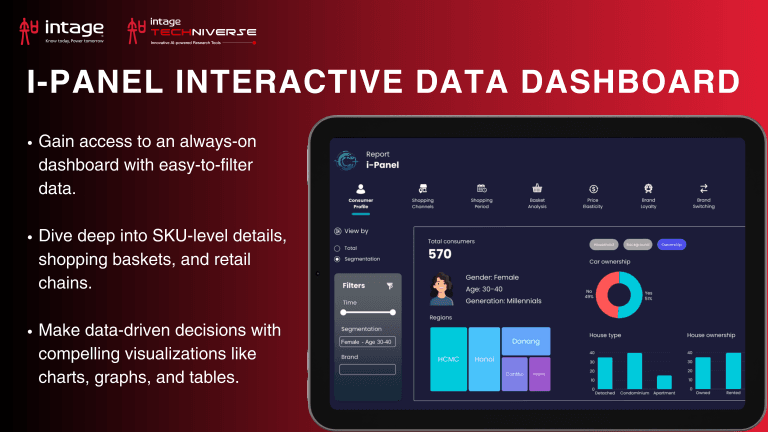
- Track real purchases. Behavioural data such as i-Panel, INTAGE Vietnam’s receipt-based shopper panel, shows what shoppers actually buy, where and how often.
How can brands act on the findings?
Use the results to decide which segment to serve first, how simple the range should be, what to explain on pack and online, and which channels to prioritise. If uncertainty about suitability is the main barrier, invest in clear guidance; if discomfort in store is the barrier, online and discreet formats may matter more.
FAQ
What do men look for in grooming products?
Many men look for simple routines, products that solve a clear problem such as oily skin, and reassurance from reviews or friends. The balance differs by group, so it should be measured for your target.
Should men’s beauty research use focus groups?
Focus groups can work for general attitudes, but one-to-one interviews or online boards are often better for personal topics such as skin problems.
How can a brand reduce men’s hesitation to buy?
Identify the main barrier first through research, then respond with clear product guidance, packaging and messaging that feel relevant, and channels where men are comfortable buying.
Research your men’s grooming range
INTAGE Vietnam is a market research company in Vietnam, part of the INTAGE Group (Japan). We run U&A studies, segmentation, interviews, product and packaging tests, and shopper panel analysis. See our market research services or contact us to plan your study.
Related reading

Latest posts
- Effective M&A (Mergers & Acquisitions) Opportunity Research
- Market Research: Building a Market Research Report for Investment Funds
 Survey Sample Size: How Many Respondents Are Enough?
 Survey Data Collection Methods in Vietnam: How to Choose
- Technology Adoption in Enterprises: How to Research Employee Behavior

