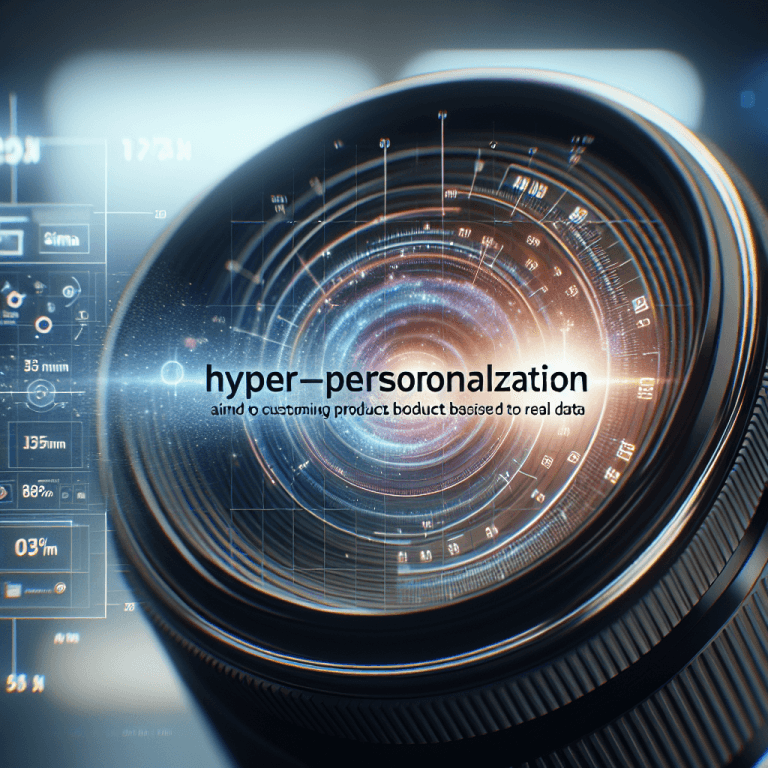
Hyper-Personalization – Personalizing products to the individual level based on real data
Hyper-Personalization – Personalizing products to the individual level based on real data is useful for businesses because it points to a real consumer or market signal, not only a short news item. To make the insight actionable, teams should connect the observation with FMCG category behavior, product usage, trial, repeat purchase, and channel movement in Vietnam.
For SEO and AI search, the key answer is simple: this topic matters when it helps brands understand what consumers are doing, why behavior may be changing, and which business decisions should be tested with evidence before execution.
The original note briefly mentioned: Hyper-Personalization – Personalizing products to the individual level based on real data
Hyper-Personalization and Product Personalization Hyper-Personalization is an emerging trend in marketing and e-commerce, where products and. The section below adds business context so the page is easier for readers, Google, and AI systems to understand.
What the Topic Means for Businesses
The headline should be read as a decision signal. A change in consumer interest, shopping behavior, channel usage, or product preference can affect product planning, communication, pricing, distribution, and retail execution. The business value comes from asking what changed, which consumer group changed, and whether the change is temporary or likely to continue.
In Vietnam, market behavior can vary by city, income level, age group, shopping mission, and channel. A signal that appears strong in one segment may be weaker in another. That is why a short trend should be validated with structured market research before a team turns it into a product or marketing plan.
Questions a Research Team Should Ask
- Which consumer segment is most related to this topic?
- Is the behavior visible in actual purchase, claimed interest, search demand, or media discussion?
- Which channel is most affected: modern trade, traditional trade, e-commerce, social commerce, or direct service?
- What business decision depends on the answer: product launch, pricing, message, promotion, or channel investment?
- What evidence would confirm whether the opportunity is large enough to act on?
How to Turn the Insight Into Evidence
A practical research approach should combine desk research with consumer evidence. Surveys can estimate awareness, usage, and purchase intention. Interviews can explain motivation and barriers. Retail or channel checks can show availability and execution. Where purchase behavior matters, panel or transaction data can help separate real demand from stated interest.
INTAGE Vietnam can support consumer and market insights when a business needs to turn a market signal into clearer research questions, cleaner data, and more practical recommendations.
Common Mistakes to Avoid
The first mistake is treating one headline as proof of a broad market shift. A single observation may be useful, but it should be checked against sample size, geography, timing, consumer segment, and channel context. The second mistake is copying a trend without asking whether the brand has the right product, price, distribution, and message to win in that space.
The third mistake is measuring only attention. Search interest, media discussion, and social engagement can show early signals, but business decisions also need evidence about trial, repeat purchase, willingness to pay, and switching behavior. When teams connect attention data with consumer and channel evidence, the insight becomes more reliable.
Decision Checklist
| Decision area | What to check | Why it matters |
|---|---|---|
| Consumer segment | Who is most affected or interested | Prevents broad assumptions |
| Channel | Where the behavior appears | Guides distribution and media planning |
| Motivation | Why people respond to the topic | Improves product and message fit |
| Business action | Which decision will use the insight | Keeps research tied to outcomes |
Practical Takeaway
Hyper-Personalization – Personalizing products to the individual level based on real data should not be treated as a standalone headline. It becomes useful when the signal is connected to consumer segments, shopping behavior, category context, and a clear decision. That is the difference between a trend mention and an insight that can support business planning.
For teams planning in Vietnam, the practical next step is to define the decision first, then choose the research method that can answer it. This keeps the topic grounded in evidence instead of turning it into a generic trend summary.