
Research insights
Conversion and Cancellation Rates in Multi-Channel Business

On this page
- Conversion Rate (CR) and Order Cancellation Rate in Multi-Channel Business
- Conversion Rate (CR) in Sales Channels
- Order Cancellation Rate in Sales Channels
- The Relationship Between Conversion Rate and Order Cancellation Rate in Sales Channel Management
- Strategies to Optimize Conversion Rate and Reduce Order Cancellation Rate on Sales Channels
- Conclusion and Recommendations for Businesses
- Use completed-order conversion as the decision metric
- A practical diagnostic sequence
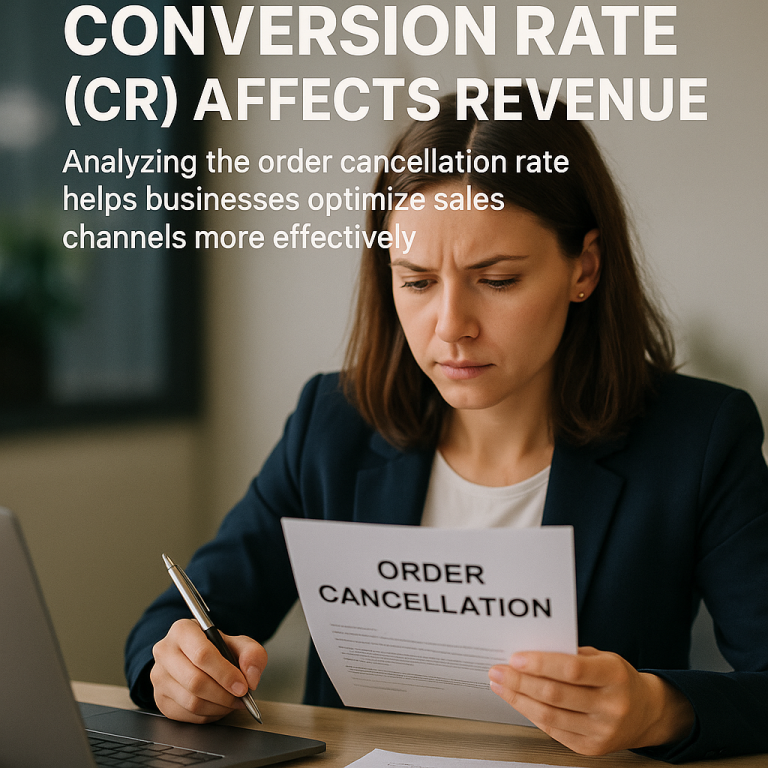
Conversion rate and order cancellation rate must be analyzed together to judge the real performance of a sales channel. A channel may generate many orders but still underperform when cancellations, returns or fulfilment failures reduce completed sales and margin.
Conversion Rate (CR) and Order Cancellation Rate in Multi-Channel Business
The Conversion Rate (CR) and order cancellation rate are two critical factors in effectively managing sales channels. They not only reflect the effectiveness of marketing activities but also directly impact the revenue and profit of businesses. In today’s multi-channel business environment, understanding and maximizing these two metrics is more necessary than ever.
Conversion Rate (CR) in Sales Channels
The Conversion Rate (CR) is defined as the percentage of customers who take the desired action (such as making a purchase or signing up for information) out of the total number of visitors. The formula for calculating CR is:
Conversion Rate (CR) = (Number of Transactions / Number of Visitors) x 100%
Comparing conversion rates across different sales channels will help businesses identify which channel performs best for further development. Several factors that affect conversion rates on each channel include:
- Quality of products/services
- User Experience (UX)
- Marketing and advertising guidance
- Data security measures
Order Cancellation Rate in Sales Channels
The order cancellation rate is the percentage of orders canceled out of the total orders placed. Understanding the causes of a high order cancellation rate helps businesses develop improvement strategies. Some common causes include:
- Lack of transparency in pricing or changes after payment
- Long delivery times
- Customer complaints not handled in a timely manner
A high order cancellation rate can cause losses for businesses, not only in lost revenue but also affecting customer perceptions of the brand.
The Relationship Between Conversion Rate and Order Cancellation Rate in Sales Channel Management
Analyzing the conversion rate and order cancellation rate are two inseparable tasks in sales channel management. Businesses need to consider factors that may affect both metrics to create a synchronized sales strategy.
Strategies to Optimize Conversion Rate and Reduce Order Cancellation Rate on Sales Channels
To optimize the conversion rate and reduce the order cancellation rate, businesses can apply various methods such as:
- Improving user interface experience
- Implementing attractive promotional programs
- Establishing clear refund and warranty policies
Utilizing technology and data helps businesses assess the effectiveness of sales channels more accurately and quickly.
Conclusion and Recommendations for Businesses
We have explored the Conversion Rate (CR) and order cancellation rate, two important factors in sales channel management. Businesses should regularly monitor and analyze data related to these two metrics to optimize sales effectiveness and enhance customer experience.
Contact us today for tailored consultation!
INTAGE Vietnam: Your trusted partner for comprehensive and effective market research solutions.
📞 (+8428) 3820 5558
🌐 https://intage.com.vn/
🏢 1st floor, Citilight Tower, 45 Vo Thi Sau St., Tan Dinh Ward, HCMC
Use completed-order conversion as the decision metric
Teams should calculate both placed-order conversion and completed-order conversion. The second measure removes cancelled or failed orders and gives a more realistic view of channel value. The comparison should use the same attribution window and channel definitions, with separate views for device, campaign, product group, customer type and fulfilment method.
When channel metrics need to be interpreted alongside customer expectations and purchasing context, consumer and market insight research can explain why customers abandon, cancel or switch channels.
A practical diagnostic sequence
- Confirm that visits, orders and cancellations use consistent definitions.
- Locate the stage where customers abandon or cancel.
- Segment the result by channel, product, customer and delivery method.
- Test one operational or experience change at a time.
- Track completed orders, margin and repeat purchase after the change.
Related reading


Latest posts
 Standard Cost Structure and Profit Margin in the FMCG Supply Chain
 Green Standards and Carbon Rules for FMCG in Vietnam: What Actually Applies
 Effectiveness of Displays and POSM at Supermarkets and Convenience Stores
 Retail Audit: How to Measure Retail Market Share
 Shopper Behavior at the Point of Sale: How to Measure It

