

Research insights
Premium Customers: Understanding Value Beyond Price
A premium customer pays for a particular level of product or service within a category, but that does not establish a single lifestyle or motive. The same person may choose a premium offer for one occasion and an ordinary alternative for another. Define the category, comparison and purchase situation before describing the audience.

On this page
High income, frequent spending and an interest in exclusivity are different characteristics. A business that treats them as interchangeable can miss what the customer actually values and design an impressive but irrelevant experience.

Identify the reason for the premium
Ask what the customer expects beyond a lower-priced alternative: materials, workmanship, reliability, time saved, a particular style or service. Explore the evidence they use to judge it. A higher price alone does not demonstrate superior quality.
For an illustrative luggage purchase, one person may value repair support while another prioritises design or a particular trip requirement. These are possible motivations to investigate, not a universal profile of wealthy consumers.
Separate purchase roles and occasions
A gift buyer may need reassurance about presentation and suitability. A repeat personal user may be more concerned with consistency and after-sales support. The person paying and the person using can also be different.
Use recent purchases and rejected alternatives to ground the discussion. Do not recruit solely on an income threshold and assume every participant has relevant category experience. Equally, a person making an occasional premium purchase may offer valuable insight into trial barriers.
Make personal service useful and discreet
Personalisation can mean remembering an explicitly supplied preference or reducing a repeated task. It need not mean frequent messages, public recognition or an extensive personal profile. Ask what kind of contact is welcome and what feels intrusive.
Give customers control over preferences and contact choices. A service promise about discretion should be reflected in actual handling of information, appointments and problem resolution. Stated trust is not proof that privacy arrangements are adequate.
Look beyond the sale
Delivery, care instructions, maintenance and complaint handling can shape whether the premium feels justified. An elaborate first encounter may be undermined by a difficult repair or unclear responsibility afterward. Review the full experience rather than only the showroom or website.
Track repeat choice in an appropriate period and distinguish product cycle from dissatisfaction. Someone may not need another durable item soon. A lack of repeat purchase does not automatically mean the brand failed, just as a repeat order does not explain the underlying motive.
When evaluating a personalised service, ask which details the customer wants remembered and for how long. A preference supplied for one gift or occasion may not belong in every later interaction. The relevant value can be thoughtful restraint as well as attentive recognition, depending on the person and context. Keep occasion-specific requests distinct from ongoing preferences.
Turn understanding into a specific offer
If customers value time, examine whether the process actually saves it. If they value craftsmanship, make relevant evidence understandable. If they seek a particular experience, identify the details that matter rather than adding indiscriminate luxury cues.
INTAGE Vietnam’s market research services can inform premium-category needs, proposition relevance and customer experience. Discuss a premium customer study with the category, occasion and decision. Findings should describe the recruited audience and trade-offs, not claim to reveal one psychology shared by every high-spending person.
Related reading


Latest posts
 Survey Sample Size: How Many Respondents Are Enough?
 Survey Data Collection Methods in Vietnam: How to Choose
- Technology Adoption in Enterprises: How to Research Employee Behavior
 How to Write a Market Research Brief for an Accurate Quote
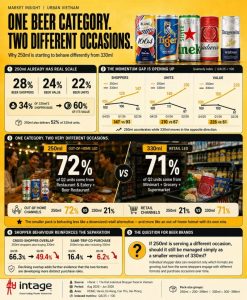 Beer in Vietnam: Why the 250ml Can Is Behaving Differently From 330ml

