

Research insights
Consumer Behaviour by Age: Compare Groups Without Stereotypes
Age can help describe a consumer sample, but it does not explain every difference in purchasing. Income, household responsibilities, experience and channel access can vary alongside age. A useful study asks which differences matter to a specific product decision and what evidence supports the explanation.

On this page
Start with a defined category and adult population. Generation labels can be used descriptively if the birth-year boundaries are stated, but they should not substitute for observed behaviour. Do not assume that everyone in a label shares the same values or technology skills.

Choose groups for the business question
Define age bands before examining the results and explain their purpose. Ensure there are enough relevant participants in each group for the planned comparison. A national-looking total can conceal very small subgroups.
If the decision concerns an ordering interface, experience with similar tasks may matter as much as age. If it concerns a family pack, household size and role may be more informative. Gather those variables rather than expecting age alone to explain the outcome.
Use comparable recruitment and tasks
A study recruited only online may miss people with limited digital access across several age groups. Document the recruitment route and the population it can represent. Consider complementary methods when the decision requires broader coverage.
Give groups comparable information, price and tasks. Use accessible wording and interfaces without coaching one group more than another. Record any assistance, because successful completion with help is different from independent use.
Separate age, life stage and period
A cross-sectional study compares people at one time. It cannot by itself show that a difference is caused by growing older rather than by different experiences or circumstances. Repeat measurement can help describe change, but the groups and measures must remain comparable.
For a hypothetical food purchase, younger and older adults may choose different packs because of household size, not a generational preference for novelty or stability. Explore alternative explanations before designing a campaign around a stereotype.
Investigate within-group variation
Look for meaningful differences among people of similar age: category involvement, access, needs and confidence. An average can hide customers who do not fit the dominant pattern. Include relevant non-users and people who reject the proposed offer.
Use qualitative interviews to understand the reasons behind an observed difference, then choose whether a broader survey is needed. A vivid interview illustrates an explanation; it does not establish how common that explanation is.
Translate differences into a testable change
Link the finding to a specific revision: clearer instructions, a suitable pack, an alternative contact route or a different information order. Test the revision with the intended users instead of assuming an age-targeted slogan will solve the problem.
Measure the task outcome and effort as well as preference. If a simpler design helps several age groups, report that broader benefit rather than forcing the result into a generational story. Avoid excluding customers whose needs are not captured by a label.
Report the sample and interpretation
State the adult age range, band definitions, recruitment, geography and fieldwork period. Describe observed differences separately from proposed explanations. Do not use famous brand names as evidence that an age strategy caused their success.
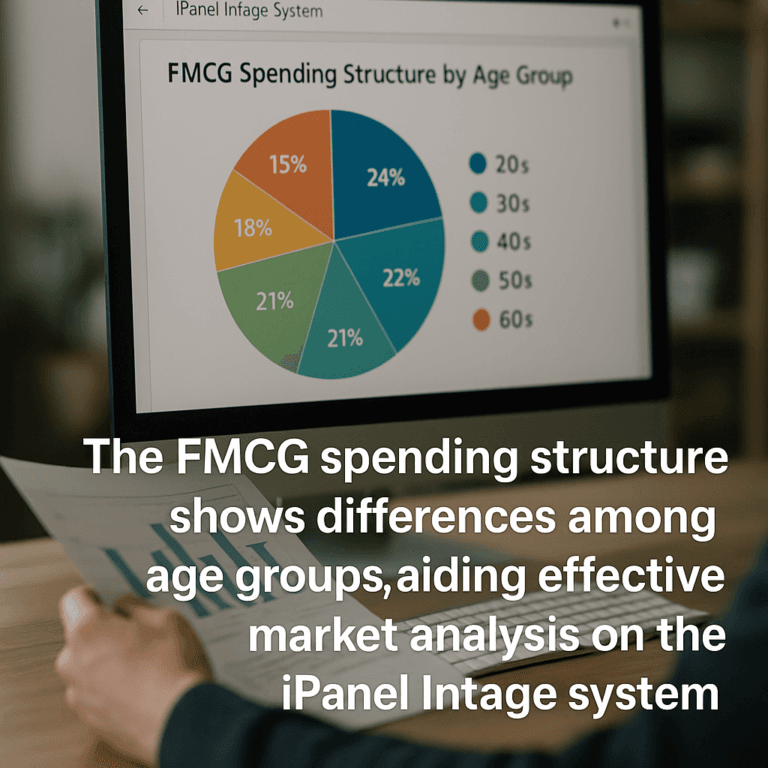
See also the article on FMCG spending by age group.
Explore market research services or discuss an age-comparison study focused on a specific customer task and the decision the comparison should inform.
Related reading

Latest posts
 Survey Sample Size: How Many Respondents Are Enough?
 Survey Data Collection Methods in Vietnam: How to Choose
- Technology Adoption in Enterprises: How to Research Employee Behavior
 How to Write a Market Research Brief for an Accurate Quote
 Beer in Vietnam: Why the 250ml Can Is Behaving Differently From 330ml

