

Research insights
FMCG Brand Positioning: Connect Promise and Product
FMCG positioning gives a buyer a clear reason to consider a brand within a category. It links an occasion, a benefit and credible support. The product, pack, price and availability then need to deliver an experience consistent with that promise.

On this page
A position is more than a claim that the product is high quality. Buyers need to understand what matters for their situation and recognise the brand when choosing. Different categories and occasions require different reasons to buy; no single formula guarantees loyalty or growth.

Choose an occasion and a meaningful benefit
Start with the task: cleaning a particular kind of item, preparing a meal or finding a convenient snack. Ask what the buyer is trying to achieve and what makes existing options unsatisfactory. Avoid defining the audience only through broad labels such as busy people.
A hypothetical snack designed for a short break might emphasise a suitable portion and convenient handling. A product intended for sharing might make a different promise. These are proposed examples, not claims about category demand or nutritional suitability.
Separate product evidence from emotional meaning
A functional benefit needs support appropriate to the claim. An emotional association explains what that benefit means in a person’s life. The two can reinforce each other, but an attractive story cannot establish product performance.
For a concrete communication example, Unilever describes OMO within its Dirt Is Good brand platform. The example illustrates linking a laundry task with a broader idea. It should not be treated as independent proof of superior cleaning, a complete account of Vietnam positioning or a causal explanation of sales.
Make the pack communicate the same choice
The front of the pack, product name, imagery and key information should support the intended interpretation. Ask shoppers what they think the product is, who it suits and what benefit is being promised before explaining the concept to them.
Compare packs in a realistic choice context. A design can look distinctive alone yet be hard to identify among alternatives. Keep the relevant price and size information visible, and separate recognition from preference and actual purchase.
Check consistency across variants and channels
Variants should make their differences understandable without losing the connection to the main brand. Too many overlapping promises can make selection harder. Explain whether a variant differs by use, format, flavour or another verified attribute.
Check the shelf, online listing and advertising for contradictions. If a claim appears only in advertising while the pack and listing describe something else, the customer may form the wrong expectation. Availability also matters: a persuasive promise cannot be evaluated through sales where the product is not stocked.
Distinguish trial from continuing preference
Ask why buyers tried the product and whether later use met expectations. A promotion may encourage initial purchase without establishing the regular proposition’s appeal. Repeat purchase needs an observation window appropriate to the category.
For eligible purchase questions, iPanel INTAGE is INTAGE Vietnam’s shopper panel and consumer behavior data platform. Discuss the observed categories, locations and channels before interpreting trial or switching. Purchase records do not reveal every motivation without additional context.
Revise the weak link
If buyers misunderstand the benefit, address the message or pack. If they understand but reject the offer, examine relevance, price and alternatives. If trial is followed by disappointment, investigate the product experience rather than assume more advertising will solve it.
See packaging research and design testing, review market research services and contact INTAGE Vietnam with the category and positioning decision.
Related reading


Latest posts
 Survey Sample Size: How Many Respondents Are Enough?
 Survey Data Collection Methods in Vietnam: How to Choose
- Technology Adoption in Enterprises: How to Research Employee Behavior
 How to Write a Market Research Brief for an Accurate Quote
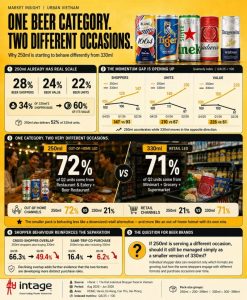 Beer in Vietnam: Why the 250ml Can Is Behaving Differently From 330ml

