
Research insights
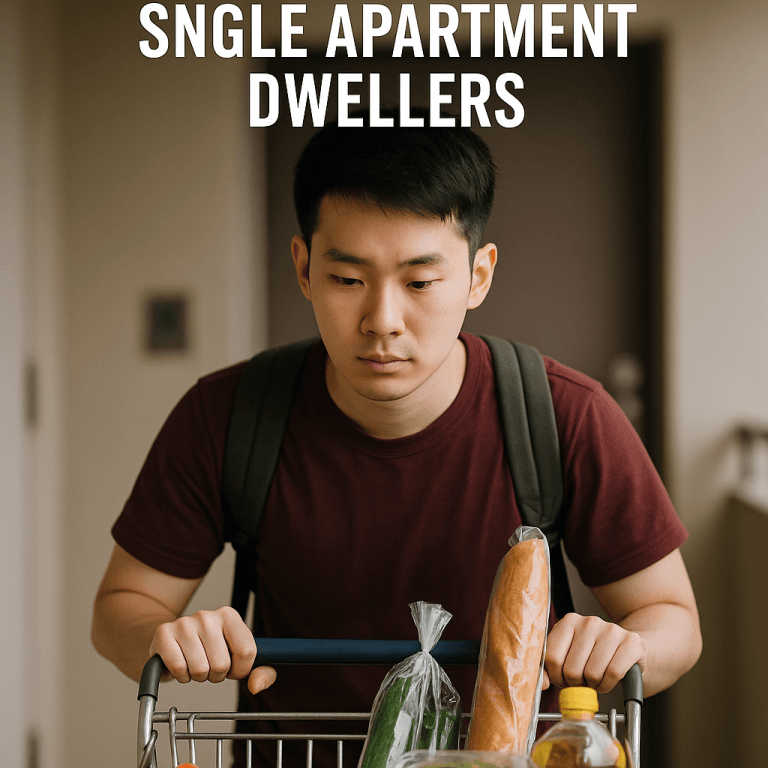
Shopping baskets of single shoppers living in apartments: what iPanel INTAGE data can show

On this page

Single shoppers living in city apartments are often described as convenience-driven: smaller packs, ready-to-eat food, more online orders. These are reasonable hypotheses, but they should be tested rather than assumed. This article sets out how to analyze the shopping baskets of this group, what purchase data can show and where extra information is needed.
Why this group interests brands
Shoppers who buy mainly for themselves may need different pack sizes, formats and services. Apartment living can add practical constraints, such as limited storage, and make delivery more attractive. Whether these needs actually lead to different baskets is the question an analysis should answer.
Defining the group carefully
The definition shapes the result, so it is worth settling first.
- Marital status is one of the published profile variables in iPanel INTAGE, so single shoppers can be identified directly.
- Age and personal income, also published variables, can narrow the group, for example to younger single shoppers in a given income band.
- Living in an apartment and living alone are not published variables. Identifying them needs extra profile questions or a survey.
Being single is not the same as living alone. A single shopper may live with parents, relatives or roommates, and their basket may look very different from that of someone who lives on their own.
Questions to ask about their baskets
- How often do they shop, and how much do they spend per trip?
- Which categories dominate: ready-to-eat food, drinks, personal care or home care?
- Do they choose smaller packs or single-serve formats?
- How much of their spending goes through e-commerce compared with modern and traditional trade?
- How much of their food and drink spending happens out of home?
- Are they loyal to brands, and how often do they buy on promotion?
Measures that help
- Trip frequency and spend per trip.
- Basket composition and the pack-size mix within it.
- Penetration of convenience categories.
- Channel share, including e-commerce and out-of-home purchases.
- Repeat purchase and brand switching.
What purchase data can show
iPanel INTAGE is INTAGE Vietnam’s shopper data platform. Panel members photograph their receipts and scan product barcodes with a mobile app, and the panel covers purchases in modern trade, traditional trade, out-of-home and e-commerce in Hanoi, Ho Chi Minh City, Hai Phong, Da Nang and Can Tho. This makes it possible to compare the baskets of single shoppers with those of married shoppers of a similar age and income.
Because the panel follows individual shoppers, the data describes what each member buys, not everything that is used in their home. That suits a study of people who shop for themselves, but it is worth remembering when comparing them with shoppers who also buy for their families.
What needs a survey
- whether shoppers live alone and in an apartment;
- reasons such as impulse buying, reading reviews or preferring delivery;
- cooking habits and storage constraints;
- attitudes towards brands, prices and promotions.
Purchase data shows what people do. On its own, it does not prove why they do it.
Reading the comparison fairly
- Compare like with like: set single shoppers against married shoppers of a similar age and income, so that differences are not simply age or income effects.
- Check the base size. A narrow group, such as young single shoppers in one city, may contain few panel members, so combine periods or cities where needed.
- Use a period long enough to capture less frequent purchases, such as large home care packs.
- Keep out-of-home food and drink separate from take-home purchases, because they answer different questions.
Practical steps
- Define the target group with marital status, age and income, and add questions on living arrangements if apartment living matters to your decision.
- Choose a comparison group, such as married shoppers of a similar age.
- Select the categories and the period to study.
- Compare trips, baskets, pack sizes and channels.
- Add a survey to understand the reasons behind the patterns.
- Turn the findings into decisions on pack sizes, product formats and channel priorities.
Hypothetical example: a ready-meal brand wonders whether a smaller pack would suit single shoppers. Panel data could show whether these shoppers already favor small formats in related categories and which channels they use; a survey could then test interest in the new pack before launch.
Conclusion
The shopping baskets of single apartment dwellers are worth studying, but the group must be defined carefully. Panel data identifies single shoppers through their profile and shows what they buy, where and how often; extra profile questions or a survey are needed to confirm apartment living and to explain their choices.
Contact us today for tailored consultation!
INTAGE Vietnam: Your trusted partner for comprehensive and effective market research solutions.
📞 (+8428) 3820 5558
🌐 https://intage.com.vn/
🏢 1st floor, Citilight Tower, 45 Vo Thi Sau St., Tan Dinh Ward, HCMC
Related reading
Latest posts
 Survey Sample Size: How Many Respondents Are Enough?
 Survey Data Collection Methods in Vietnam: How to Choose
- Technology Adoption in Enterprises: How to Research Employee Behavior
 How to Write a Market Research Brief for an Accurate Quote
 Beer in Vietnam: Why the 250ml Can Is Behaving Differently From 330ml

